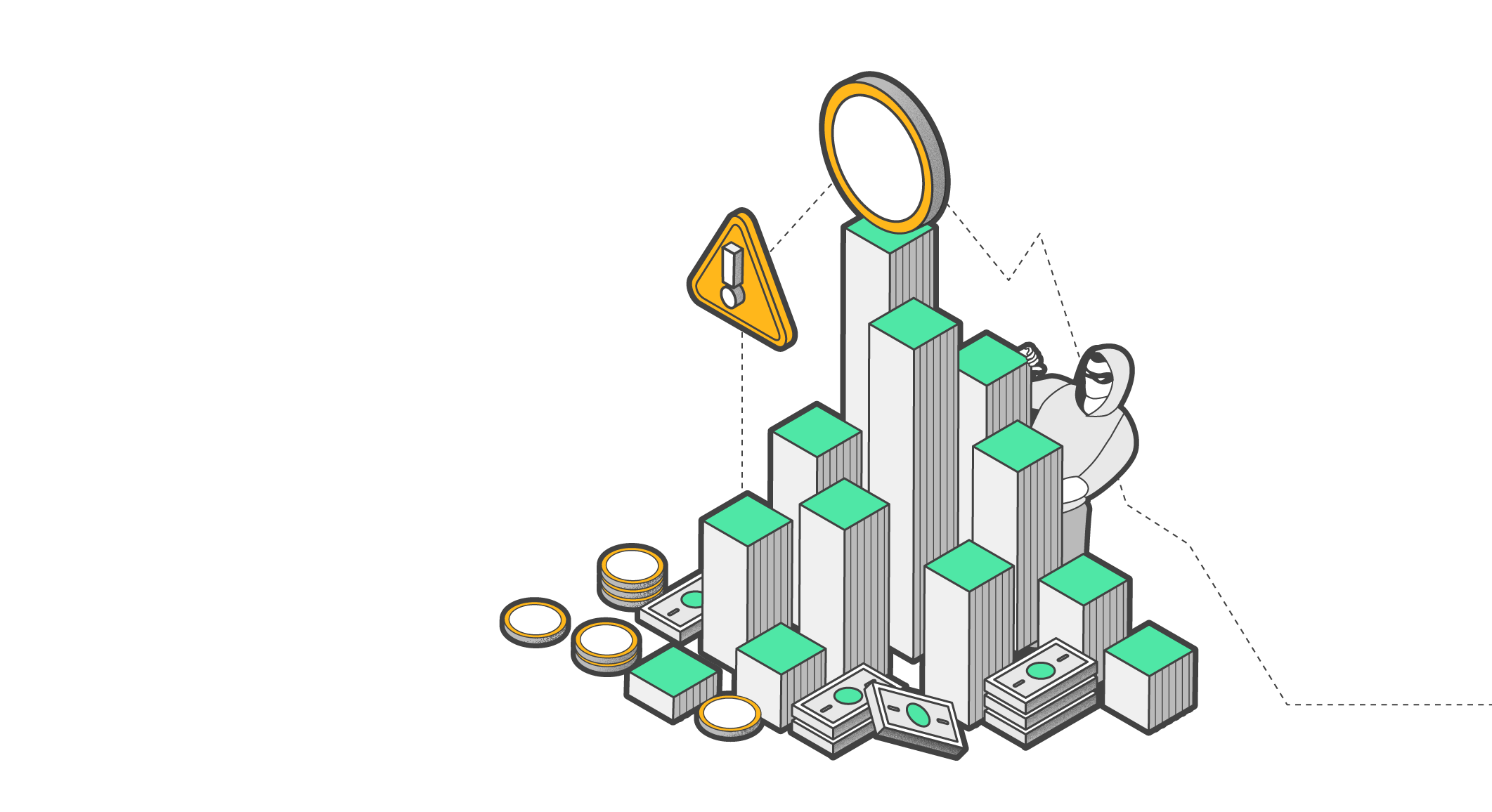
Remember when you first heard about Bitcoin hitting $10,000? That wasn't just another day. It was part of something bigger that started months earlier when it hit $2000 for the first time. It was the first bull market for many of you in crypto.
A bull market isn't just about prices going up for a few days. It's when crypto prices keep climbing for weeks, months, or even years. And just like your favorite roller coaster, there will be some dips along the way, but the overall direction stays upward.
The term actually comes from traditional finance, covering everything from stocks to real estate. But in crypto, it takes on a whole new level of excitement.
Identifying a Crypto Bull Market
Spotting a crypto bull market is a bit like reading the weather; there are clear signs if you know what to look for.
Looking at crypto's history, we've seen this pattern play out several times. The 2013 bull run saw Bitcoin jump from $12.15 to $1,242. The 2017 surge took the crypto market to a stunning $500 billion valuation. And who could forget 2020-2021, when Bitcoin reached that famous $66,000 mark?
Each of these runs brought something new: 2013 put Bitcoin on the map during the Cyprus financial crisis, 2017 introduced us to ICOs, and 2020-2021 welcomed major institutions into crypto. Every bull market leaves the crypto ecosystem bigger and more developed than before.
Here are the key indicators that tell you a bull market is happening:
Price Trends and Volume
When crypto prices steadily climb higher over weeks or months, that's your first clue. But there's more to it—trading volume usually jumps up too. More people are buying and selling, showing increased interest in the market.
Market Sentiment and Activity
During a bull market, you'll notice more wallets becoming active and more value being locked in DeFi protocols. Even large holders, often called "whales," start moving their assets differently. But remember, following whale movements alone isn't a smart strategy.
Exchange Movements
One interesting signal comes from watching how crypto moves in and out of exchanges. When more people pull their crypto out of exchanges and into cold storage like the Tangem Wallet, it often signals a bullish mood—they're planning to hold onto their assets for the longer term.
The Phases of a Crypto Bull Market
A bull market doesn't just happen overnight. It unfolds in distinct stages:
Early Accumulation: Smart money moves first. Early investors start buying while prices are still low, often before most people notice anything's happening.
Growing Awareness: Prices start climbing, catching the attention of more investors. News coverage begins picking up steam.
Media Spotlight: This is when crypto dominates headlines. New investors flood in, driving prices up even faster.
Profit Taking: Experienced investors start selling some of their holdings, securing their gains at peak prices.
Market Correction: The excitement cools down, prices stabilize or drop, and the market prepares for its next phase.
Understanding these patterns matters for both trading and investing. It helps you make smarter decisions about when to enter the market and when to take profits. But remember, past performance doesn't guarantee future results. Each bull market writes its own story.
How Long Does a Crypto Bull Market Last?
Crypto bull markets are like seasons—they come and go, but no two are exactly alike. While most reach their peak within 12 to 18 months, their duration isn't set in stone.
Let's look at some real numbers. The 2017 bull run lasted about 165 days, starting in late July 2017 and ending in early January 2018. Then came the 2020-2021 bull run, which stuck around for 470 days, from July 2020 to mid-November 2021.
But here's something interesting: Bitcoin's history shows us longer patterns. From early 2015 to 2018, we saw a remarkable 35-month bull streak. After a brief 14-month breather, another 33-month bull market took hold. These patterns tell us that crypto bull markets can last anywhere from a few months to nearly three years.
Factors That Can Extend Crypto Bull Markets
Several key elements can keep the bulls running longer than expected. Here's what makes a difference:
1. Economic Climate
Money likes to flow where it grows best. When interest rates stay low, people often look for better returns in assets like crypto. The 2020-2021 bull run is a perfect example; it happened during a time when borrowing costs were at rock bottom and governments were printing money like never before. The Federal Reserve's interest rate policies have created an environment where investors actively seek alternative assets. Lower interest rates typically encourage investment in crypto assets, as traditional investment yields become less attractive.
2. Institutional Support
Big players matter. The approval of Bitcoin and Ethereum ETFs in 2024 marked a turning point for institutional investment. Major financial institutions now view cryptocurrencies as legitimate investment vehicles, bringing unprecedented levels of capital into the market. When companies like JPMorgan Chase and Goldman Sachs step into crypto, it's not just about their money; it's about the confidence they bring to the market. Their presence often convinces others that crypto is here to stay.
3. Technology and Innovation
Better tech means better markets. As blockchain networks get faster and more secure, they become more attractive to investors. Decentralized finance (DeFi) platforms continue to mature, offering sophisticated financial services without traditional intermediaries. The combination of AI agents and Web3 applications creates innovative solutions across various industries, driving both utility and value in the crypto space.
4. Supply and Demand Mechanics
Some cryptocurrencies, like Bitcoin, have built-in features that can extend bull markets. The most famous is the "halving" event, which cuts the rate of new coin production in half. Less new supply often means higher prices, especially when demand stays strong. Past halving events have consistently preceded major bull runs, and the 2024 halving appears to be following this pattern.
5. Market Sentiment and Regulations
Clear rules make investors comfortable. When governments create friendly crypto regulations, it often leads to longer bull markets. Think of it like building a house: people are more likely to invest in construction when they know the building codes.
6. Politics
The current administration's pro-crypto stance has fundamentally altered the regulatory environment. The proposed Strategic Bitcoin Reserve initiative, similar to traditional gold reserves, signals a dramatic shift in how governments view digital assets. This political support extends beyond mere acceptance to the active integration of cryptocurrencies into national economic strategies.
The crypto market might be young, but it's maturing. Bull markets now tend to be more sustained and less wild than in the early days. While nothing in crypto is guaranteed, understanding these patterns helps you make smarter decisions with your investments.
Smart investors watch these factors carefully. They know that bull markets don't just happen—they're created by a perfect mix of conditions coming together at the right time. Secure your bull market gains with military-grade cold storage. Get the EAL6+ certified Tangem Wallet today.
Crypto Bull vs. Bear Markets
Market cycles operate like seasons, alternating between periods of growth and decline. Here is a clear comparison between bull and bear markets:
Characteristic
Bull Market
Bear Market
Price Movement
Up at least 20% over extended periods
Down at least 20% over extended periods
Investor Sentiment
Optimistic, confident about future gains
Pessimistic, cautious about further losses
Trading Strategy
Traders tend to go long, buy, and hold
Traders prefer cash/stablecoins or short positions
Market Activity
High trading volumes, increased participation
Lower trading volumes, reduced market activity
Media Coverage
Extensive coverage, positive sentiment
Limited coverage, negative sentiment
Risk Appetite
Investors are more willing to take risks
Risk aversion prevails
Capital Flow
Money flows into crypto markets
Money flows to stable assets
Transaction Fees
Generally higher due to increased activity
Generally lower due to reduced activity
Here's a clever way to remember the difference: bulls attack by thrusting upward with their horns, while bears strike downward with their paws—just like the market directions they represent.
The Current Crypto Market (2025)
Bitcoin just smashed through $100,000, and it's not alone in this rally. The 2025 crypto market shows remarkable strength across the board:
Bitcoin
In 2025, Bitcoin broke through the $100,000 barrier, and experts predict it will reach $200,000 by the end of the year. This surge comes from several factors, including spot Bitcoin ETFs getting approved and the Bitcoin halving event. Plus, there's talk about a Strategic Bitcoin Reserve, similar to how the Federal Reserve manages gold, which could push prices even higher—possibly up to $500,000.
Stablecoins
Stablecoins aren't just staying steady; they're growing fast. After hitting $187.5 billion in total supply in 2024, they're expected to reach $400 billion by the end of 2025. The top ten stablecoins have a combined 8.7 million holdings, with USDT, USDC, and DAI accounting for 97%.
Ethereum (ETH)
Ethereum holds its ground as a powerhouse, currently controlling 11% of the entire crypto market's value. As of January 25, 2024, ETH trades at $3,333, with a market cap of around $401.69 billion. Analysts see $10,000 as a realistic target for 2025.
Ripple (XRP)
XRP trades at $3.11 as of January 25th, up an impressive 254.05% over the last month. After winning its SEC battle, XRP has become a top choice for investors interested in cross-border payment technology. The $10 price target seems possible, backed by growing partnerships with financial institutions.
Solana
Solana's focus on fast transactions and low fees has paid off. Trading at $250.04 per SOL as of January 25th, it reached levels not seen since April 2022. Despite a recent slight dip, Solana maintains its position as a serious player in the crypto space.
Investment Considerations During Bull Markets
Bull markets can make anyone feel like a genius investor. But smart money knows better—it's not just about riding the wave; it's about knowing how to swim.
Investment Approaches
Let's look at strategies that can help you make the most of these upward trends while protecting your investments:
Buy and HODL Strategy
The simplest approach often works best. Buying and holding cryptocurrencies for the long term requires patience but removes the stress of timing the market.
Strategic Dip Buying
Market dips aren't failures; they're opportunities in disguise. Buying during temporary price pullbacks lets you accumulate assets at better prices. The key is identifying genuine support levels rather than catching falling knives.
Dollar Cost Averaging (DCA)
Consistency beats timing. By investing a fixed amount regularly, say $100 on the first of each month, you average out your entry prices. It's like showing up for practice every day instead of trying to perfect your game in one session.
Advanced Trading Strategies
For those who prefer a more active approach, swing trading offers opportunities to profit from short-term price movements. Just remember: with greater potential reward comes greater risk. Derivatives like margin trading, futures, and perpetual swaps can amplify both gains and losses.
Risk Management Essentials
A bull market without risk management is like a car without brakes. Here's what to watch for:
Market Volatility
Yes, prices trend upward during bull markets, but the path isn't straight. Rapid price swings can shake out unprepared investors. Setting stop-loss orders and maintaining appropriate position sizes helps weather these storms.
The Overconfidence Trap
When everything goes up, everyone feels like a market genius. This false confidence can lead to excessive risk-taking. Remember: trees don't grow to the sky, and neither do bull markets.
Asset Bubbles
As prices rise, some assets may become disconnected from reality. Buying overvalued assets near the peak can lead to substantial losses when the market corrects.
Herd Mentality
FOMO (Fear of Missing Out) is real, but following the herd blindly is dangerous. Your investment decisions should come from research and strategy, not Twitter trends.
Protect your crypto portfolio from market volatility with Tangem's tamper-proof hardware wallet. Start your journey of secure cold storage now.
In Conclusion…
Bull markets offer fantastic opportunities for wealth creation, but they require a balanced approach. Success comes from combining optimism with caution, strategy with flexibility, and enthusiasm with discipline. The key is not just recognizing opportunities but being prepared with the right tools and mindset to capitalize on them responsibly.
As the crypto market matures and institutional money flows in, securing your assets becomes more crucial than ever. The Tangem Wallet offers military-grade protection for your bull market gains through its EAL6+ certified Samsung secure element—the highest security certification in the industry. With features like multi-currency support across 60+ networks, easy backups, and the ability to tap and trade through Tangem Express, you can actively participate in bull market opportunities while keeping your assets in cold storage.
Remember, in a bull market, it's not just about making gains—it's about securing them for the long term.
FAQs
How do bull markets impact the overall economy?
Crypto bull markets ripple beyond just prices. They spark financial innovation, increase market liquidity, and can influence traditional markets. However, they also bring volatility and speculation that might affect broader financial stability.
What are the key indicators that signal the start of a bull market?
A bull market announces itself through multiple signals: sustained price increases, higher trading volumes, positive market sentiment, rising Bitcoin dominance, and increased exchange activity.
How do bull markets differ between the stock market and the crypto market?
While both markets share basic patterns, crypto markets dance to their own beat. They're more volatile, never sleep (trading 24/7), and are significantly influenced by social media. Plus, being younger markets, they're still establishing their patterns.
How do investor sentiments influence the duration of a bull market?
Bull markets run on confidence. Positive sentiment can extend rallies, while fear can cut them short. Media coverage, social trends, and market news all play their part in this psychological tug-of-war.
Can a bull market last forever?
No bull market lasts forever—that's not pessimism; it's reality. The trick isn't trying to ride the entire wave; it's knowing when to take profits. The best investors understand that another cycle always comes around, and they'll be ready when it does.
Don't miss! We drop prices for 20%
Flash sale expires soon!
Stakes with BTC Reward.
Tap & Get
 -20% + Up to $20 BTC Reward till Mar 31